How do you build a social network in 2026?
Niche social networks grow by more than 50% a year in active users. Strava, Letterboxd, and Discord show that a specific community beats a generalist network.

Article summary
- Niche social networks grow by more than 50% a year in active users.
- The social network app market was worth $76.5 billion in 2024 and is aiming for $207 billion in 2028.
- BeReal reached 73 million users in August 2022, then declined, like Clubhouse.
- Strava has 125 million athletes, and about 10% pay for Summit at $7.99 per month.
- SunApp, a network for people with chronic illness, reached 5,000 active users.
Summarize this article with
Two thirds of Facebook users say they suffer from fatigue toward the platform. 59.9% of consumers question the authenticity of the content they see online. And 62% cite trust as a decisive factor in choosing a platform (Accenture Life Trends 2025).
Meanwhile, niche social networks are growing by more than 50% a year in active users (Sensor Tower, 2025). Strava, Letterboxd, Goodreads, Discord: platforms built around a specific passion, a specific community, a specific reason to exist.
The market for social network apps was worth $76.5 billion in 2024 and is expected to reach $207 billion by 2028, a 28.3% annual growth rate (Business Research Company, 2025). This market is transforming: the mega-platforms are saturating, and niche networks are capturing users who are looking for real connections rather than an algorithmic feed.
firstapp has supported projects in this space, notably SunApp, a social network dedicated to people living with a chronic illness. This guide explains what you really need to understand before you start.
1. The social network market in 2026
The global social network market generated $180.5 billion in 2025, with a projection of $411 billion by 2031 at an annual growth rate of 14.3% (Mordor Intelligence, 2026). Mobile apps specifically represent $76.5 billion in 2024 and are expected to triple by 2028.
But behind these global figures, a break is underway. Advertising remains the first revenue model, but creator subscriptions, virtual goods, and premium features are rising fast. And above all, the distribution of users is changing: the mega-platforms are losing engagement to smaller, more targeted platforms.
Info: According to Sensor Tower data (2025), niche social apps centered on hobbies all recorded growth in monthly active users of at least 50% since the start of 2024. This figure, observed at the same time on Strava, Letterboxd, and AllTrails, reflects a structural trend, not an isolated phenomenon.
Three factors explain this shift. First, algorithmic fatigue: users are exhausted by feeds filled with AI-generated content, ads, and irrelevant recommendations. Second, the trust deficit: when the majority of content is potentially fabricated, people look for spaces where the contribution is human and authentic. Third, the search for a real community: people want to talk about what they are passionate about with people who share that passion, not scroll generic content endlessly.
To understand the global mobile market this sector sits in, our guide on building a mobile app for a startup lays down the useful foundations.
Newsletter
Once a week.
Last issue
We opened 10 apps to see how they sell a subscription.
+534 people read us each week
2. Why building the next Facebook is a bad idea
Facebook has 3 billion users. Instagram has 2 billion. TikTok has 1.5 billion. LinkedIn has 1 billion. These platforms took between 10 and 20 years to reach these figures, with billions of dollars of investment, teams of hundreds of engineers, and network effects that are almost impossible to catch up with.
Building a generalist social network in 2026 means competing directly with these players on their own ground. You have neither the resources, nor the initial user base, nor the time required to build a comparable network effect.
The good news is that you do not need to.
The lesson of BeReal and Clubhouse
BeReal reached 73 million users in August 2022 before declining sharply. Clubhouse followed exactly the same trajectory. Both platforms had an original idea, fast growth, and a fall just as fast once the novelty passed. The reason: they had created a habit from nothing, with no anchor in an activity users already practiced in their real lives. When curiosity faded, nothing was left to bring them back.
The platforms that last, Strava, Letterboxd, AllTrails, Goodreads, are built around activities users do anyway: running, watching films, hiking, reading books. The app follows the habit instead of trying to create a habit from zero. That is the fundamental principle of a social network that lasts.
The vertical niche principle
A niche social network serves a specific community, around a specific interest or identity, better than any generalist platform will ever be able to. That precision is a strength, not a weakness.
On Facebook, a film-photography enthusiast shares space with vacation photos from their in-laws, political opinions, and ads for products they do not want. On a platform dedicated to film photography, every piece of content is relevant, every connection is qualified, and engagement is structurally higher.
The question to ask before you start is not "how will I compete with Instagram?" but "which community can I serve better than anyone, and why do these people need a space dedicated to them?"
3. The niche networks that win: Strava, Letterboxd, Discord
As in the dating or education sectors, the social platforms that are progressing in 2026 are the ones that made a radical choice and stuck to it.
Strava: the community of athletes
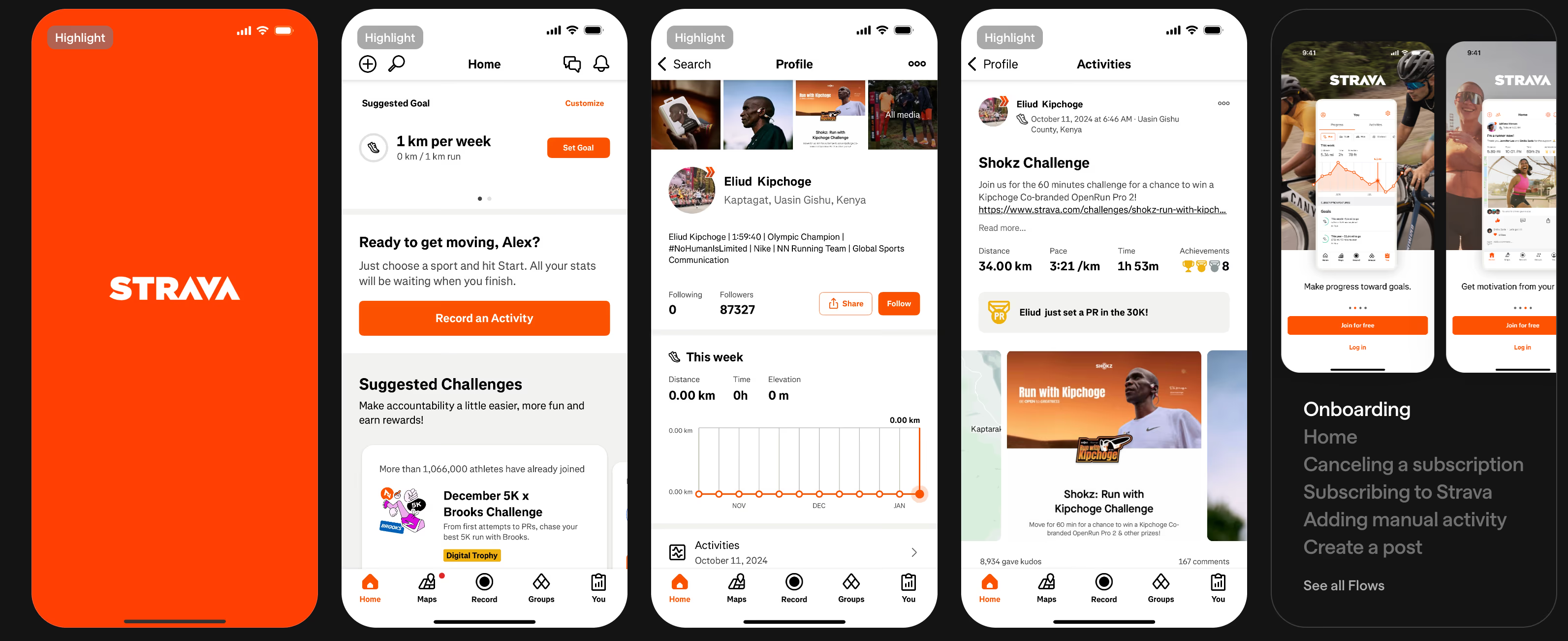
Strava started as a simple GPS tracker for cyclists. Today, it is a social network of 125 million athletes, with features for sharing activities, leaderboards, challenges, and kudos, the equivalent of a like on athletic performance.
The business model is clear: a working free version, and a Summit subscription at $7.99 per month that unlocks advanced analysis and deeper metrics. About 10% of users subscribe, generating more than $115 million in annual revenue. The brand Chipotle ran a campaign on Strava that generated 700 million impressions and a 20% increase in its sales, which illustrates the monetization potential of brand partnerships.
What Strava got right: it did not try to be a generalist fitness social network. It anchored the product in a real activity (GPS tracking), added a social layer (share, compare, encourage), and let the community create the value.
Letterboxd: the social film diary
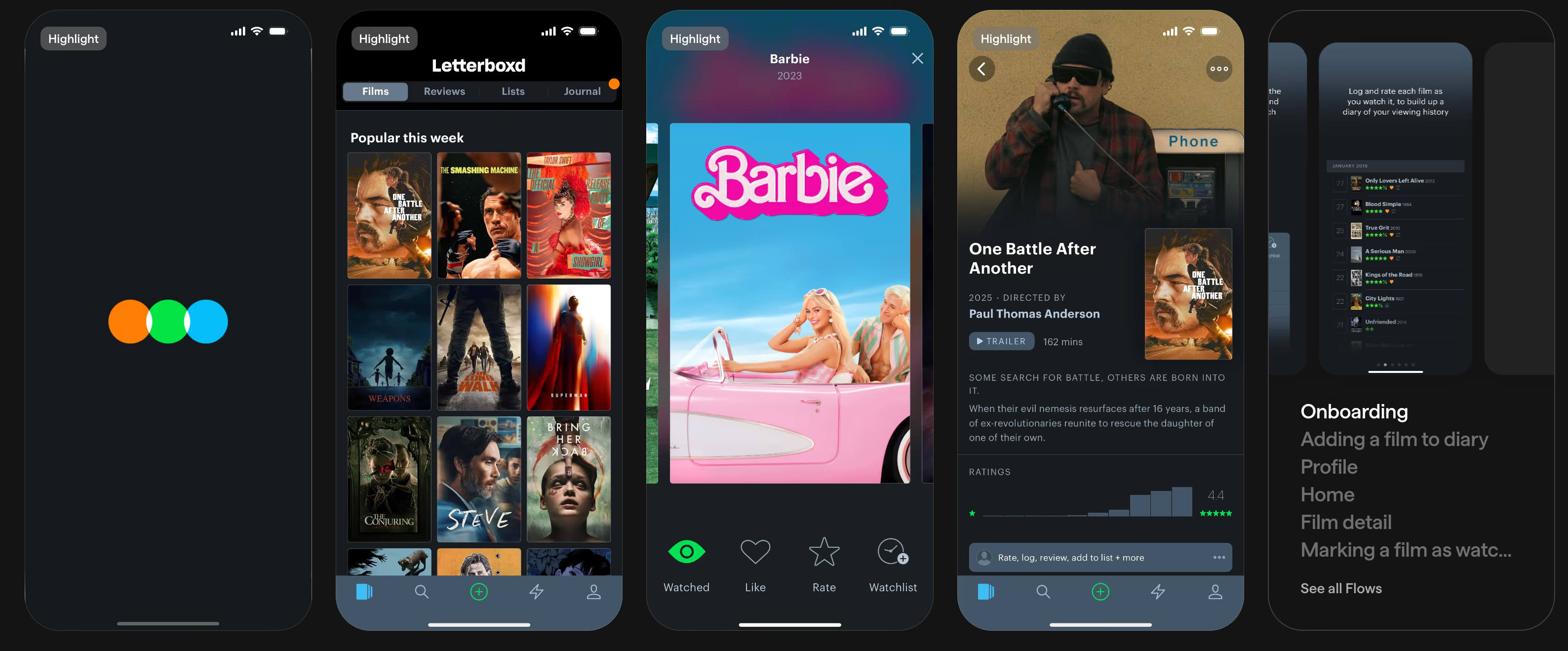
Letterboxd, launched in 2011, is a film-review app where users log everything they watch, write reviews, and follow the lists of their friends and favorite celebrities. The platform saw massive growth in 2024-2025, becoming the cultural reference for film lovers.
The model is identical to Strava in its logic: anchored in an existing activity (watching films), enriched with a social layer (sharing your tastes, discovering other people's), with a premium subscription for advanced features.
What sets Letterboxd apart from other review platforms: the absence of an aggressive algorithm. Users see their friends' reviews, not what an algorithm decided they should see. This design decision creates a feeling of authenticity that the mega-platforms can no longer reproduce.
Discord: interest communities
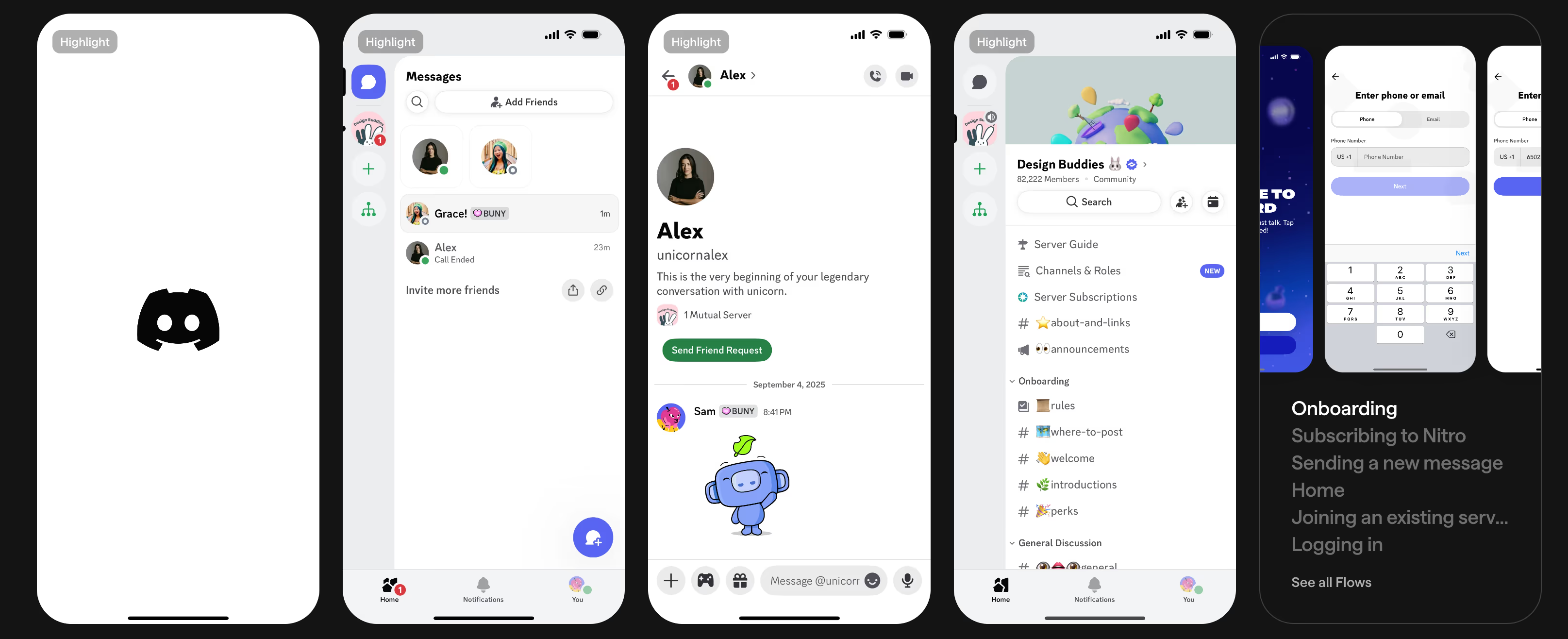
Discord started as a communication tool for gamers. In 2026, it is a platform of interest communities covering gaming, tech, art, music, finance, and many other subjects. More than 300 million registered users, annual revenue above $300 million via Nitro subscriptions and server boosts.
The Discord lesson: a solid communication infrastructure (voice channels, text channels, threads) can serve any community if it is well organized. Verticalization does not always come from the product itself, but from the way communities use it.
4. The mechanic that keeps a social network alive
A mobile social network rests on a fundamental dynamic: the value of the network increases with the number of users. That is the network effect. The more people join the platform, the richer the content, the more interesting the connections, and the harder it is to leave.
But this network effect is also the main barrier to entry for a new social network. You have to reach a critical mass of users for the platform to be useful, and you have to be useful to attract users. That is the chicken-and-egg problem, even harder to solve here than in dating apps.
How to solve the chicken-and-egg problem
The strategies that have worked on niche social networks all follow the same logic: concentrate first, then expand.
The first step is to launch in a very tight perimeter: a single city, a single university, a single existing community. Facebook started at Harvard. Nextdoor launched neighborhood by neighborhood. The idea is to reach enough density in a tight space for the platform to be immediately useful, before widening.
The second step is to lean on existing communities. Your future social network has an offline equivalent: a forum, a Facebook group, an association, a subreddit. These communities already have the users you are looking for. Approaching them directly, offering your app as a tool that improves their existing experience, and building your first base from there, is a much more effective method than starting from zero.
User-generated content as the engine
On a social network, content is not created by the company. It is created by the users. That is what makes the business model so powerful over the long term, and so fragile at the start. Without content, new users do not stay. Without users, there is no content.
The practical solution: preload the platform with quality content before opening to the public. That can take the form of founder posts, contributions from early adopters invited manually, or editorial content produced by the team in the first weeks. The goal is that the first user who arrives sees a living platform, not an empty page.
Moderation as an investment, not a cost
A social network without moderation degrades quickly. Spammers, fake accounts, and inappropriate content destroy the quality of the experience and drive legitimate users away. Moderation has to be thought through from day one: clear community rules, accessible reporting tools, and a team or processes dedicated to reviewing reported content.
Moderation is not an operating cost to minimize. It is an investment in the quality of the community, which is itself the core value of the product.
5. The essential features of a mobile social network
The viable minimum of a social network
A viable mobile social network V1 rests on four fundamental blocks.
The user profile. The storefront of each member: photo, bio, interests, contribution history. The level of detail depends on the niche: a network of athletes will show recent activities, a network of film lovers will show the history of films watched. The profile must be easy enough to fill in that it does not discourage signup, and rich enough that other members understand who the person is.
The feed. The place where contributions from people you follow and the most relevant community content appear. The most important decision here: algorithm or chronological? A chronological feed is perceived as more authentic and more predictable. An algorithmic feed is more engaging but creates a dependence on opaque decisions. For a niche network, a chronological or lightly filtered feed is often preferable at the start.
Social interactions. Likes, comments, shares, reposts, mentions: the basic bricks of social interaction. The short reply, Strava's kudos or Letterboxd's "want to see," allows a fast interaction without friction. Comments allow a deeper conversation. Both are necessary.
Messaging. Direct communication between members, indispensable from V1. It can be simple (text only, with no voice or video calls) for launch, but it must exist so that connections turn into real relationships.
What you can add after V1
Groups and sub-communities, events, contextual push notifications, advanced search by interest, live streams, and community challenges: these features enrich the experience but are not necessary at launch. The priority of V1 is to validate that the community forms and that content is generated organically. Everything else can wait.
6. Monetization: the models that work
Advertising is the dominant monetization model of the mega-platforms. For a niche social network, it is rarely the right starting point, because user volumes are not high enough to generate significant ad revenue in the first years.
The premium subscription
This is Strava's model ($7.99 per month for Summit) and Letterboxd's (a Pro subscription for advanced features). The free version lets you take part in the community. The subscription unlocks deeper analysis, exclusive features, or an ad-free experience. This model works because users who are highly engaged in their passion are ready to pay for tools that improve their practice.
To go further on subscription mechanics, our article on mobile paywall optimization applies directly.
Creator features
Discord generates more than $300 million a year with Nitro subscriptions and server boosts. Twitch monetizes via creator subscriptions and tips. The model: let the most active members (content creators, community hosts) monetize their audience inside the platform, and take a commission. This model creates alignment between the platform and its most valuable contributors.
Brand partnerships and brand content
A highly engaged niche community is an extremely targeted audience for brands. The Chipotle campaign on Strava illustrates it: 700 million impressions and a 20% increase in sales. Integrated brand partnerships (sponsored challenges, brand content, physical rewards) work well on niche networks because the audience is qualified and the engagement rate is much higher than on generalist platforms.
Monetizing aggregated data
The behavioral data of a niche community has significant value for players in the sector concerned: brands, publishers, institutions. Sharing aggregated and anonymized insights with partners can be a complementary revenue source, provided it is done within a strict GDPR frame and communicated transparently to the community.
7. What firstapp would do on your social network project
Social networks may be the most complex mobile projects to build. Not because the technology is hard, but because the product is the community, and building a community is not improvised.
What we have already built: sunapp
SunApp is a mobile social network dedicated to people living with a chronic illness. Founded by Clément Parot, the founder of firstapp, the project reached 5,000 active users. This project taught something fundamental about social networks: users do not stay for the features. They stay because they feel understood, heard, and less alone.
In a niche social network, the identity of the community is the product. The features are the container, the community is the content. This lesson guides every design decision we make on this type of project.
What we would design first
The community launch strategy before the code. Before writing a line of React Native, we would work on the launch question: where are the first 500 users? How do you recruit them manually? How do you preload the platform with quality content before opening? These questions are not marketing questions. They are product questions.
The onboarding that anchors identity. A social network's onboarding must immediately make the user understand why this space is made for them. On SunApp, that went through a simple question: what is your chronic illness? On a network of athletes, it is which sport you practice. This identity question asked from the start creates an immediate sense of belonging and connects the user to people who resemble them.
Easier contribution mechanics. On a social network, content is created by users. Our role is to make that creation as simple and natural as possible. A one-tap activity share button, a pre-filled post template, a suggestion of what the user could share today, are mechanics that raise the contribution rate and keep the feed alive.
Growth loops specific to social networks
The invitation to join a space. "Join our [niche] community, 3,000 people like you have already done it." Each invitation email is personalized with the inviter's name and a preview of the platform's content. The conversion rate of a user invited by a peer is much higher than that of a user acquired through ads.
The weekly digest. Every week, an email summarizing the best contributions from the community. This format brings dormant users back, creates a feeling that "something is happening," and is shareable outside the platform to attract new members.
Contribution badges. Rewarding the most active members (first post, 10 contributions, platform anniversary) with badges visible on their profile creates a motivation to contribute and a visible hierarchy that guides newcomers toward the community's reference members.
You have a social network project? Get an estimate in a few minutes: Request a quote ↗
8. FAQ
Also read
How do you find your first 100 app users?
More than 14,700 subscription apps launch every week. The ones that last recruit their first 100 users one by one, and only open acquisition once retention is proven.
How do you get your mobile app known?
More than 14,700 apps launch every month, downloads are flat at +0.8%, and revenue is up 10.6%. TikTok, Reddit, Instagram, ASO, and growth loops are the channels that last.
How do you solve the chicken-and-egg problem at the launch of a social network?
The method that has proven effective: concentrate the effort on a very tight perimeter (a city, a university, an existing community), reach enough density in that perimeter for the platform to be immediately useful, then widen. In parallel, preload the platform with quality content before opening, and manually recruit the first members from existing communities (forums, groups, associations) that share your niche's interest.