Generate revenue from the launch of your mobile app: the 8 key decisions
Most apps generate nothing in the first month, because of decisions made before launch. The ones that get paid ship a simple MVP, with a hard paywall from day one.

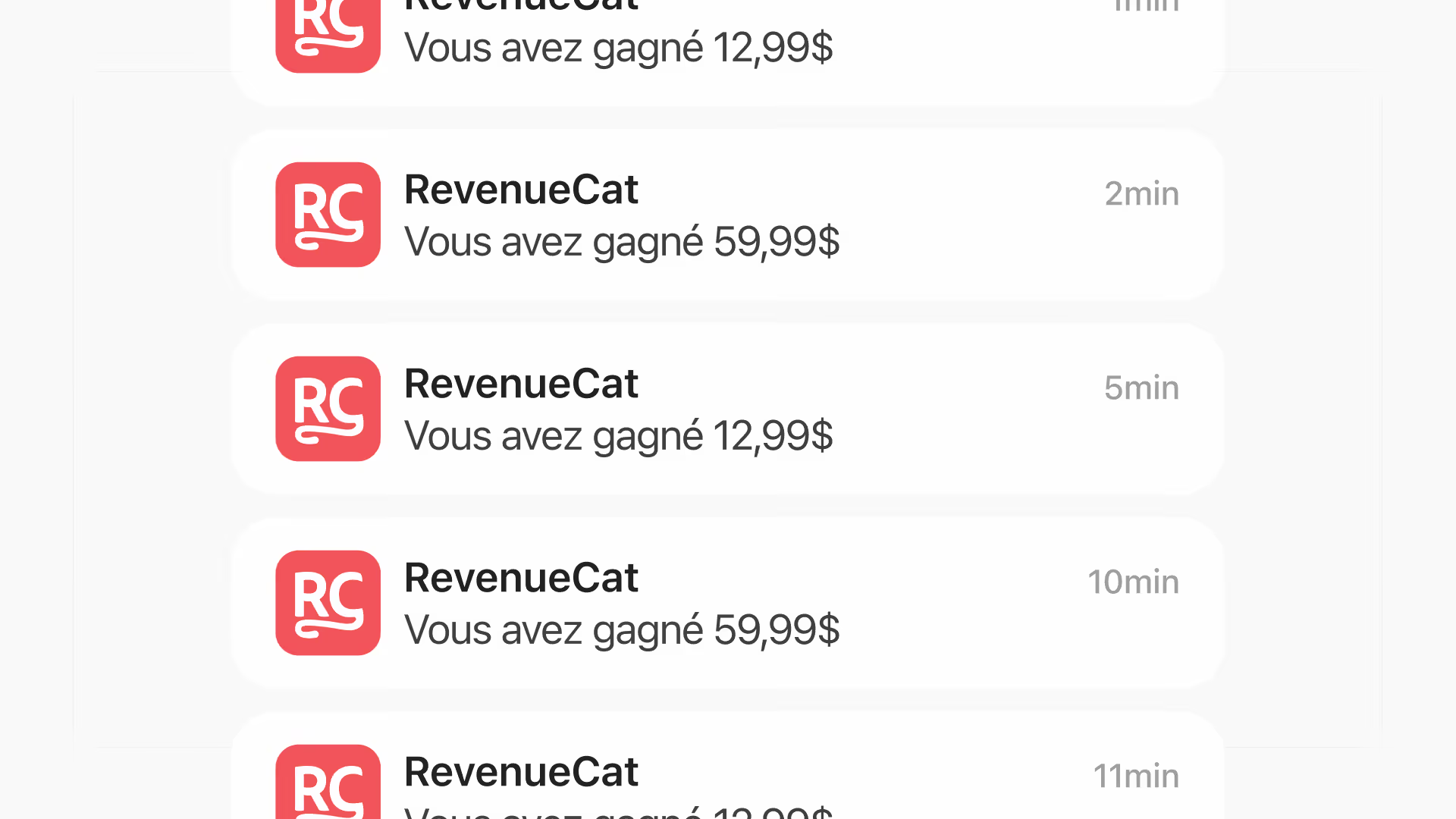
Article summary
- Most apps generate nothing in the first month because of decisions made before launch.
- 90% of startups fail, often for having built something nobody wants.
- Jam Solidaire signed its partner nonprofits before the app even existed.
- Calyra launched with a hard paywall, and its TikTok strategy was built during development.
- If five people do not reach the main feature in under 2 minutes, the onboarding is not ready.
Summarize this article with
Most apps generate nothing in their first month. Not because the product is bad. Because the wrong decisions were made before launch even happened. firstapp walks you through the 8 decisions that change everything.
The first month after a launch is the only period when you have a natural advantage: newness. The App Store algorithm boosts new apps. Your first users are the most engaged. Your energy is at its maximum. This window does not last. And you do not get it back.
What we see among founders who generate revenue from the first month is that they all made the same decisions, often against a founder's natural instinct. Here are those decisions, unfiltered.
1. Launch the simplest version possible, now
The mother decision. The one everyone understands and nobody applies.
Your perfect app in 6 months is worth infinitely less than your imperfect app in 3 weeks. Not because perfection does not matter. Because the market will give you more information in 2 weeks of real use than in 6 months of development in a silo.
The brutal reality: the feature you think is indispensable before launch is often the one your users will never use. Uber did not have dynamic pricing at launch. Airbnb had only a single listing. Dropbox had only a video. These apps validated the essential first, and built the rest after. Every week of delay to finish a detail is a week without revenue, without data, without reviews.
How to define your MVP
The question to ask for each feature before launch is simple and brutal: without this feature, can my app deliver its main promise? If the answer is no → the feature is indispensable. If the answer is "not really" or "that would be nice" → the feature waits for V2.
Another effective method. Sort each feature into 4 categories:
Must have - without this, the app cannot deliver its main value. These features are in the MVP.
Should have - important but not blocking. These features are in V1.1.
Could have - nice-to-have. These features arrive when you have traction.
Won't have - do not build this now, maybe never.
Most founders put too many features in the "Must have" category. Be ruthless. If your MVP solves a single problem exceptionally well, that is enough to launch and generate first revenue.
What that changes in concrete terms
Launching earlier with fewer features means:
✓ Weeks of real feedback on what users actually use and what they ignore
✓ First App Store reviews that arrive earlier and boost algorithmic ranking
✓ First revenue that funds the next iterations
✓ A launch date that exists, not a date that keeps sliding
Newsletter
Once a week.
Last issue
We opened 10 apps to see how they sell a subscription.
+534 people read us each week
2. Validate before you build, or while you build
The market is the best test there is. You still have to ask it the question before you build everything.
90% of startups fail. One of the first causes: building something nobody wants. Pre-launch validation is not optional. It is insurance against the most expensive risk there is.
Client case with Jam Solidaire : The founder of Jam Solidaire, an online donations app for nonprofits, did not stop at having an idea. He went and signed partner nonprofits one by one, by hand, before the app even existed. At launch, he already had his first "clients," social proof, and validated demand. He sold his solution before he had his product. That is validating before you build.
How to validate without having a product
1. The pre-launch landing page. A simple page that describes the problem you solve and collects emails from interested people. If nobody signs up, the problem is not painful enough.
2. User interviews. 10 conversations of 30 minutes with your target are worth more than 3 months of development. You will understand exactly how they live the problem you want to solve, and often you will discover that your initial solution was off.
3. Selling before the product. Like Jam Solidaire. Go get your first commitments, verbal, financial, partnership, before you have a line of code. If nobody commits, go back to the drawing board.
4. The TestFlight beta. Before the public launch, distribute the app to 20-50 people via TestFlight. Watch how they use it. Look at where they stop. What they do not do will teach you as much as what they do.
Do not fall into the trap of biased validation, asking your friends and family whether it is a good idea. They will say yes. Look for strangers who have the problem you solve, not people close to you who want to please you.
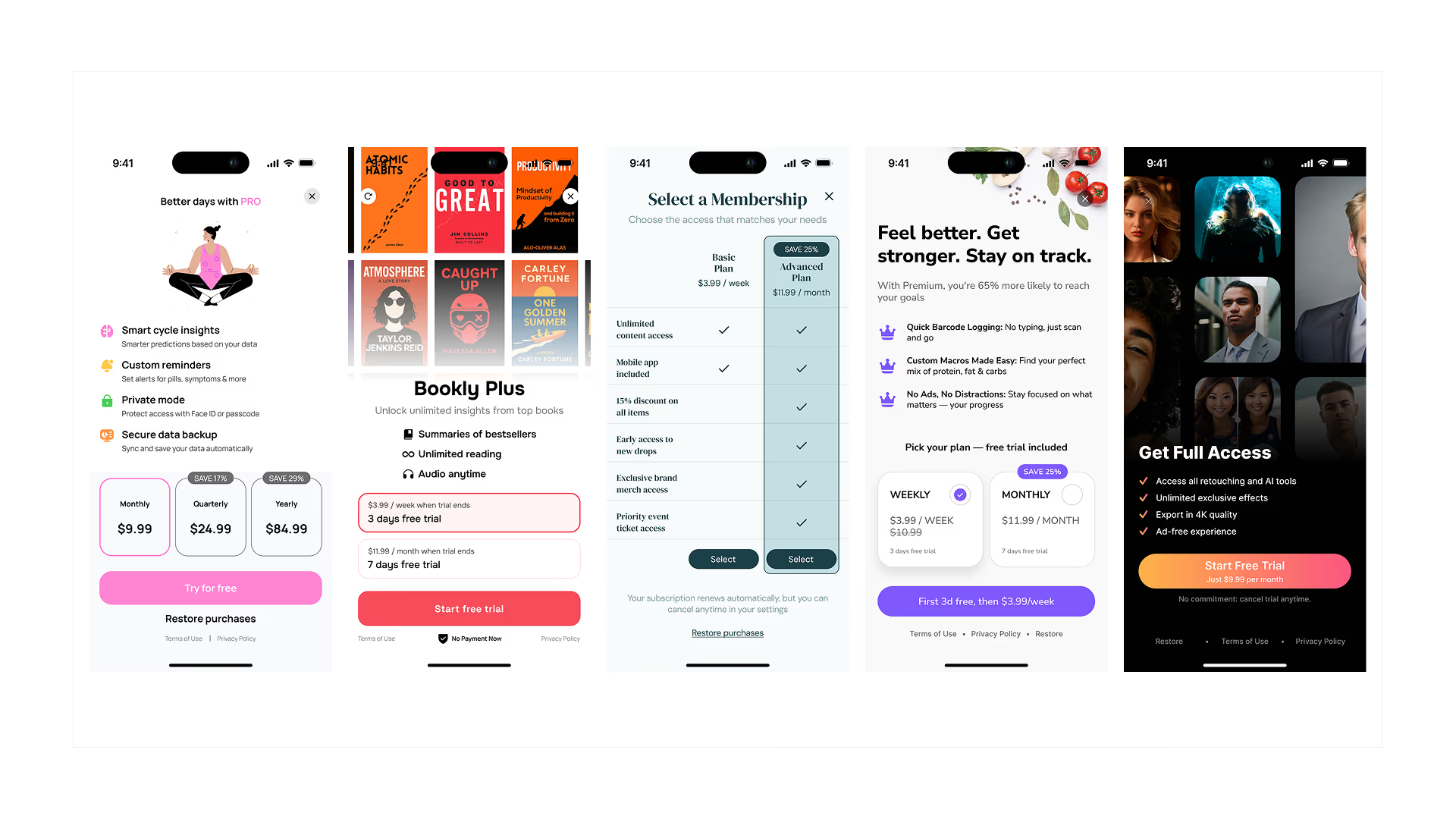
3. Launch with a hard paywall from J1
Do not let your first users leave for free.
Most founders' reflex: "we will do free first to acquire users, we will monetize later." That is a mistake. The first month is the only moment when newness works for you. The users who arrive at this stage are curious, engaged, and ready to pay if the value is there.
A hard paywall built well does not drive users away. It filters for the right intent. Those who pay have a real reason to be there. And a user who pays from J1 has a much higher probability of staying, leaving a positive review, and recommending the app. There is a dedicated article on monetization if you are interested.
Client case withCalyra (ex-Nutria) : Hard paywall from launch. A long, carefully built onboarding to bring the user to understand their nutritional value before seeing the price. Result: €30,000 in revenue the first month and 2% churn, among the best benchmarks in the nutrition sector.
How to build a hard paywall that converts
✓ Show the value before the price. Onboarding brings the user to their aha moment before displaying the paywall
✓ Display the exact price, the billing frequency, and what the user gets. No vagueness
✓ Offer a free trial of 3 to 7 days to reduce the initial friction
✓ Add a double paywall: if the user refuses the main offer, automatically offer them a reduced-price offer
4. Get onboarding right before you spend on acquisition
A leaky bucket stays leaky no matter how much you pour into it.
Spending on ads with a failed onboarding is pouring water into a leaky bucket. Every euro spent to acquire a user who leaves after 30 seconds is a euro lost. Before you turn on a single campaign, ask yourself one honest question: does my onboarding bring the user to their aha moment before they leave?
The simplest test there is: give the app to 5 people who do not know you. Watch them use the app without guiding them, without explaining anything. If they do not reach the main feature in under 2 minutes, the onboarding is not ready. You do not need an analytics tool to run this test.
The 3 questions to ask about your onboarding before launch
1. How long until the first aha moment? If it is more than 2 minutes, that is too long. Every step that does not lead directly to that instant should be cut or postponed.
2. Am I asking before I give? Email, permissions, subscription before the user has lived the value = a high drop-off rate. The rule: give first, ask after.
3. Am I explaining, or am I making them live it? An onboarding that explains the features does not convert. An onboarding that gets them to complete a first real action does.
Fixing onboarding before you scale acquisition makes your ad budget twice as profitable without touching it. I strongly recommend reading our article on onboarding optimization.
5. Set a price that reflects the value, not the fear
Underpricing out of fear of rejection often creates exactly what you wanted to avoid.
The majority of founders underprice their app. The logic is understandable: "if it is cheaper, more people will pay." That is false. A price that is too low sends a signal of poor quality and attracts poorly engaged users who will churn quickly. Price is a trust signal as much as a revenue lever.
The data from the RevenueCat 2026 report is clear: apps priced well for their category convert better than underpriced apps. The user associates price with perceived value. An app at €9.99/month is perceived as more serious than an app at €1.99/month, even if the product is identical.
How to find the right price
1. Look at the benchmarks for your category. Health & Fitness: median LTV of $16.44. Business: median LTV of $14.82. These are the prices your competitors charge and that your users accept paying.
2. Test two prices from launch. A/B test €7.99 vs €12.99/month for 30 days. The data will give you a definitive answer that no intuition can replace.
3. Always offer an annual plan. The annual offer at a reduced rate (e.g. €49.99/year vs €9.99/month) increases LTV, reduces churn, and improves your cash flow. 43% of subscriptions taken out are annual plans according to Mirava 2025 data.
6. Activate your early adopters manually
The first 100 users will not come from the algorithm. They will come from you.
Founders who wait for the App Store algorithm to work for them end up with an app with no reviews, no traction, and no data to iterate on. The first users are found by hand: DMs, personal emails, showing up in communities, direct partnerships.
It is not scalable. That is the point. You need qualitative feedback, not quantitative volume. These first 50 to 100 users are your most precious test subjects. They will tell you exactly what works and what does not.
Where to find your first users for your mobile app
✓ Reddit and niche communities. Find the subreddits where your target lives. Take part in conversations for weeks before launch. When you launch, you already have credibility.
✓ Product Hunt. A well-prepared Product Hunt launch can generate hundreds of downloads in 24 hours. Prepare the launch 2 to 3 weeks ahead: description, visuals, influential hunters.
✓ Your direct network. LinkedIn, Twitter, professional contacts. Not to ask them to download out of politeness. To identify those who really have the problem you solve and invite them to test.
✓ Partnerships before launch. Like Jam Solidaire. Identify players (nonprofits, companies, influencers) who have a qualified audience and an interest in recommending you. Sign before you launch.
What founders who succeed do: they do not just announce their launch. They build a relationship with their target for weeks beforehand. When the app ships, the curiosity is already there. The first download is not a discovery. It is a logical next step.
7. Put the review strategy in place from J1
The first weeks are the most critical for the App Store algorithm.
The volume and velocity of reviews in the first weeks have a direct impact on the app's ranking in search results. An app with no reviews after 2 weeks sends a negative signal to the algorithm and to users who visit the listing.
The review strategy is not improvised at J+3. It is prepared before launch. And it rests on a simple principle we have already mentioned: ask at the right moment, not at the right volume. I am putting the link to the article here to collect 100 reviews quickly on the App Store.
The review action plan for the first month
J1. Implement the review-request module triggered after the first aha moment in the app. Not before, not after a disappointing session.
J3. A personalized email to users who completed a first key action: "You did [action], we would like your review," with a direct link to the listing.
J7. A push notification to active users only. A personal tone, a short message. Those who are not active do not leave positive reviews.
J14. Reply to every review received within 48 hours, positive and negative. Apple notifies the author of your reply, who can then update their rating.
8. Prepare distribution before launch, not after
The founder who discovers TikTok on launch day has already lost.
This is the most frequent and the most expensive mistake. The founder spends 100% of their energy on the product until J-1, and finds themselves on launch day with no audience, no content ready, no distribution strategy. The app is beautiful. Nobody sees it. And then, panic.
Building an audience on TikTok takes weeks. Building a LinkedIn presence takes months. Identifying the right partners and creating relationships takes time. All of that has to start during development, not after launch.
Client case with Calyra (ex-Nutria) - The founder of Calyra (ex-Nutria) built his TikTok strategy in parallel with the development of the app. When launch arrived, the audience was there, the content was ready, distribution was switched on from J1. Result: first users in the first hours, not 3 weeks late while he learned how to film videos.
What the founder must prepare while the product is being built
✓ Their main channel. TikTok, LinkedIn, Instagram, YouTube Shorts: choose one channel, not five. Learn the codes of the format, post regularly, build an audience before you need one.
✓ Their launch content. The 3 to 5 posts/videos that announce the launch must be ready and scheduled. Not written on the morning of J1.
✓ Their distribution partnerships. Who has an audience that matches your target and an interest in recommending you? These conversations must start weeks before launch.
✓ Their early-adopter list. An email list of 200 people waiting for the launch is worth more than 10,000 ad impressions on day J.
Our conviction at firstapp: our role is to handle the product, onboarding, paywall, ASO, reviews. The founder's role is to handle distribution, the audience, the content, the partnerships. These two workstreams must move in parallel. When one waits for the other, it is the entire first month that pays for it.
The first month cannot be caught up, it is the only period when you have newness, the algorithm's attention, and launch energy. Prepare it like a military campaign, not like a go-live.
You are preparing your app's launch ? At firstapp we handle the product, onboarding, paywall, ASO, and the review strategy, so you can focus 100% on distribution and communication. This split of roles is what makes the difference between a launch that generates revenue and a launch that generates frustration.
FAQ on revenue at launch
Which apps actually pay?
The apps that generate real revenue in 2026 are the ones that solve a real, painful, recurring problem, and that charge their users from launch. The most profitable categories according to RevenueCat 2026 data are health and fitness (nutrition apps, coaching, workout tracking), productivity and tools, education and learning, and AI apps that generate a visible result quickly. What separates the apps that "actually pay" from the others is not the category. It is the execution: an onboarding that delivers value quickly, a well-placed paywall, and careful retention. An app in any category can generate solid revenue if these three elements are in place.
Which app actually makes money?
The apps that actually make money are the ones with a solid subscription model, an onboarding that converts, and retention above average. Among our clients at firstapp, Calyra (ex-Nutria), a nutrition app, generated €30,000 in revenue from the first month with a hard paywall and a long, carefully built onboarding. Jam Solidaire, a nonprofit donations app, reached €1M in revenue in two years with an average basket of €13 to €14, which is 30% above the market average. What they have in common: clear value, a paywall from launch, and distribution switched on before day J. There is no magic category. There is a method.
What is the most profitable mobile app?
The most profitable mobile apps in the world are subscription apps in entertainment, fitness, and productivity. TikTok, Tinder, YouTube, Duolingo, or Spotify each generate billions of dollars a year. But the real question for a founder is not "what is the most profitable app?" It is "what app can I build that will be profitable for me?" RevenueCat 2026 data shows that the most profitable apps at indie scale are in health, fitness, productivity, and AI, with median revenue that grew by 5.3% in 2026. The top 10% of apps grew by 306%. Profitability does not depend on the category. It depends on execution on onboarding, the paywall, and retention.
Also read
Hard paywall vs soft paywall: how to choose
According to RevenueCat, a hard paywall converts at about 10.7% from install, versus 2.1% for freemium. Adapty, which measures the paywall view, gives the advantage to the soft paywall.
How do you reach €1,000 MRR with your app?
€1,000 MRR is about 100 subscribers at €9.99 a month, or about 200 at €4.99. Calyra generated €30,000 from the first month by making these decisions in order.
How can I get paid for an app?
To get paid with a mobile app, there are four main models. Subscription: users pay monthly or annually to access premium features. This is the most profitable model over the long term thanks to predictable recurring revenue. In-app purchases: selling features, content, or credits one by one. In-app advertising: revenue generated by showing ads to free users. And transaction commissions: in marketplaces, the app takes a percentage on each transaction. Apple and Google take a commission of 15 to 30% on each transaction made through their stores. Our recommendation at firstapp: a subscription with a hard paywall from launch. It is the model that generates the fastest and most predictable revenue for a B2C app.