Why users cancel their trial within 24 hours
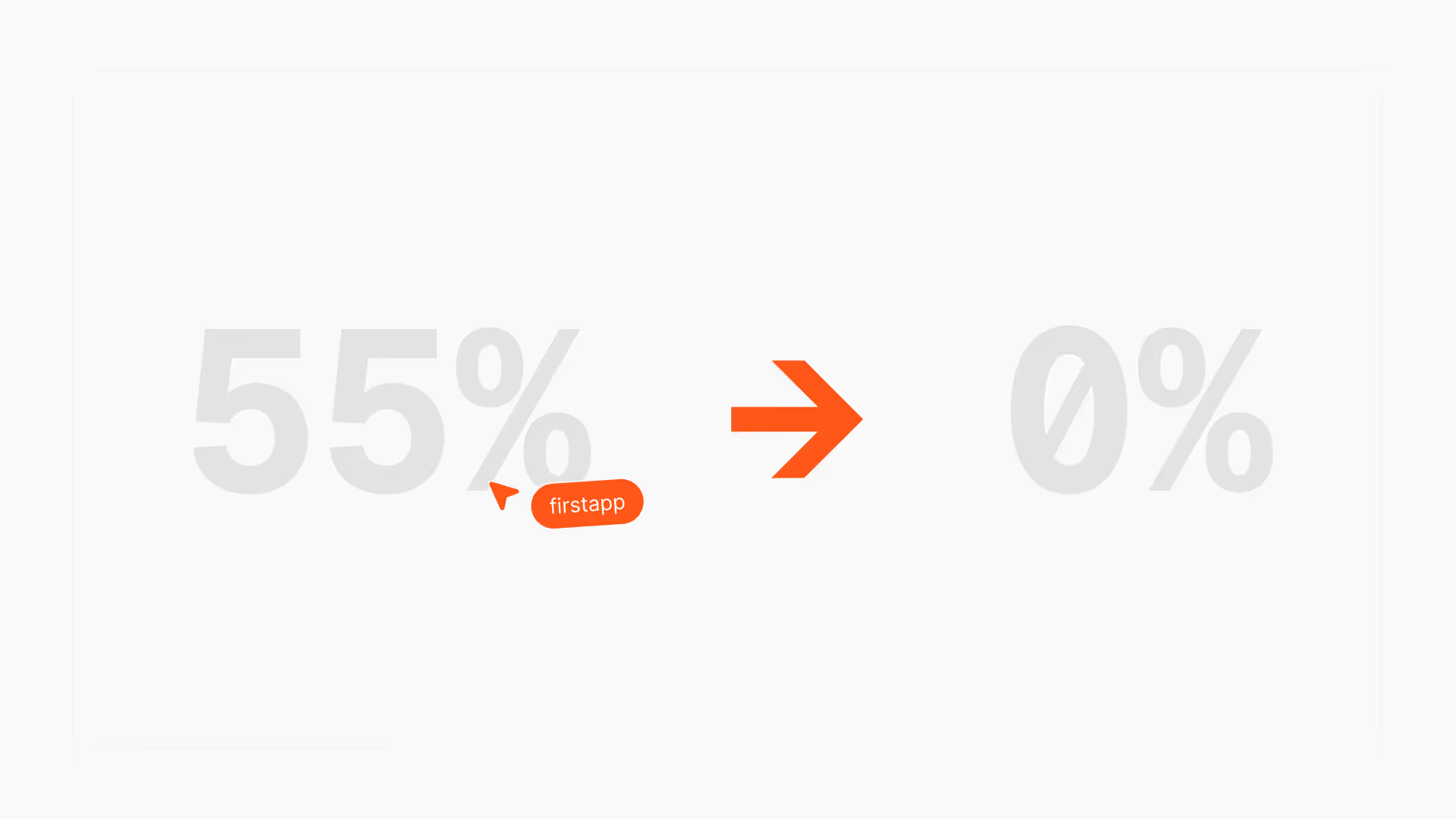
55% of trial cancellations happen on day 0, before the app is really used. A longer trial does not fix that. Value has to come before the paywall.

Article summary
- 55% of trial cancellations happen on day 0, before any real use of the app (RevenueCat, SOSA 2025).
- 89.4% of trials start on the day of install (Adapty, 2026).
- A longer trial does not stop a cancellation made in the first minutes.
- The paywall sits right after the value, not before, and not after a long path.
Summarize this article with
55% of trial cancellations happen on day 0, before the user has had time to use the app (RevenueCat, SOSA 2025). And 89.4% of trials start that same day, the day of install (Adapty, State of In-App Subscriptions 2026).
A cancellation within 24 hours is not someone quitting after a week with the product. It is a decision made the same day, often in the first minutes, at the paywall.
firstapp sees this in audits. The reflex is to lengthen the trial. The churn article already says it: a longer period does not keep someone who cancels before using the app. The levers are elsewhere. The order of the screens. And what the trial unlocks.
What cancelling within 24 hours actually means
Day 0 is the day of install. The person did not have a bad week. They started a trial, or refused one, before seeing what the app does for them.
Three cases come back.
- They took the trial for one specific action, did it, and cancelled immediately so they would not be charged.
- The paywall arrived before they understood the value, and they refused the trial.
- They started the trial out of curiosity, with no intention to subscribe.
None of these three is fixed by a follow-up on day 7. The decision is already made.
Newsletter
Once a week.
Last issue
We opened 10 apps to see how they sell a subscription.
+534 people read us each week
Value before the paywall, then the paywall right away
If the paywall comes before the click of value, the trial starts with no reason to stay, or it does not start. That is day-0 churn manufactured by the order of the screens.
The rule, already set in the paywall design article: the paywall comes right after the aha moment. Not before, because someone who has not understood the value will not pay. Not after a long path, because the motivation of install day fades. Onboarding has one job here: get the person to do the thing they downloaded the app for, then open the subscription.
A trial that ends in a single action
The first case is rational. The user wanted one feature. The trial unlocks it. They use it. They cancel immediately so they are not charged at the end.
Lengthening the trial changes nothing: they already got what they came for. The problem is the offer. If the whole value fits in one session, cancelling on day 0 is the right decision on their side.
What changes is the next screen. Once the action is done, the app shows what comes next, not a dead end. The feature that justified the trial is not the whole product. If it is, the paywall is selling an action, not a use. The article on the paywall covers the structure of the offer. The test here is simple: after the first action, is there a reason to open the app again tomorrow?
The trial must not be the only door
The third case comes from a button. The trial is the only way forward, so the curious start it, then cancel. They did not choose to subscribe. They chose to see what was next.
The trial is offered once the value has been seen. Not as the condition for seeing it. Someone who already got their result decides. Someone who has seen nothing yet cancels, or starts the trial just to leave the screen.
What this does not fix
A day-0 cancellation is not a payment failure, and it is not a cancellation after weeks of use. Grace periods, retries, and winback handle another moment. They live in the churn article. Mixing them with day 0 means optimizing the wrong lever.
Trial length affects the move to paid at the end of the trial, not a cancellation made in the first minutes. You do not make up for a paywall that came too early by adding seven days.
FAQ
Why do users cancel their trial the same day?
Because the decision is made before use. RevenueCat (SOSA 2025) measures 55% of trial cancellations on day 0. Adapty (2026) measures 89.4% of trial starts on the day of install. The most common pattern: the paywall or the trial arrived before the value, or the trial only served an action that was already finished.
Does a longer trial reduce these cancellations?
Not the day-0 ones. Someone who cancels in the first minutes will not see the extra days. Length matters later, on the move from trial to paid. That lever is covered in the churn article.
Where should the paywall sit to avoid a day-0 cancellation?
Right after the moment the person has understood what the app does for them. Not before. Not at the end of an onboarding that pushes that moment back. For a B2C app, the most common sequence is the end of onboarding, after the aha moment.
Also read
How do you reduce churn in a mobile app?
Cutting churn from 2% to 1% can double LTV. About 31% of Google Play cancellations are payment failures, versus 14% on iOS.
Paywall design: 6 decisions before the visual
The Adapty 2026 data covers more than 16,000 apps: the LTV gap between the best and the worst paywall is 636%. It comes from six structural decisions, not from the color of the button.

Aha moment: how to find it in your onboarding?
More than 70% of users uninstall in the first 3 days, often without having felt the app's value. The aha moment is that click, and onboarding has to place it before the paywall.