Quiz onboarding: why it works (and when to avoid it)
Noom converts with 113 quiz screens, Flo with 70. The same quiz drops conversion for a game or a tool whose value arrives immediately.


Article summary
- Noom strings together up to 113 screens and 10 to 15 minutes of quiz; Flo has 70.
- Each answer raises the psychological cost of quitting before the paywall.
- Gaming sells 82% of weekly plans: a long quiz before the first session creates drop-off.
- A progress bar raises the completion rate by 10 to 20%.
- If the answers change neither the content nor the paywall, the personalization is perceived as fake.
Summarize this article with
Noom converts with an onboarding of 113 screens and 10 to 15 minutes of quiz. Flo has 70. These two apps are among the most profitable in their respective categories.
And yet, if you apply the same logic to a gaming app or a productivity tool with immediate value, you will drop your conversions.
Quiz onboarding is one of the most powerful levers in mobile monetization, and one of the most misunderstood. firstapp works with founders on optimizing their funnel from launch. What we see: the quiz works for precise reasons, in precise contexts. When those conditions are not met, it creates friction without value.
Here are the mechanics, the data, and the conditions in which to avoid it.
What is a quiz onboarding?
A quiz onboarding is a sequence of questions asked of the user at the start of their path in the app, before they reach the product or the paywall. The questions cover their goals, their level, their constraints, their preferences, sometimes their personal situation.
The stated goal: personalize the experience. The real goal, and the one with the most impact: build progressive commitment before the user reaches the payment screen.
Quiz onboarding is different from a simple preferences screen in its length, its conversational character, and the emotional investment it creates. Three questions on a white background is a form. Twenty questions organized into themes, with progress bars and micro-feedback, is a conversion architecture.
Newsletter
Once a week.
Last issue
We opened 10 apps to see how they sell a subscription.
+534 people read us each week
Why quiz onboarding converts better
Progressive commitment as a conversion architecture
The most documented mechanism behind the quiz's effectiveness is progressive commitment, also called "commitment architecture" in industry data.
Each question the user answers is a micro-investment. The further they go in the quiz, the higher the psychological cost of quitting. This principle is documented in the 48 Laws of Subscription App Success (Law 02): small interactive steps before the paywall increase emotional investment and reduce drop-off.
In practice: a user who has spent 10 minutes answering questions about their health goals, their habits, and their obstacles is not in the same mental state in front of the paywall as a user who arrives after 3 screens of generic features. They have already invested. Quitting means losing that investment.
This is why quiz onboardings work particularly well on premium subscriptions. The higher the perceived value of what the user has built, the stronger the conversion at the paywall.
Personalization changes the moment of the sale
The second mechanism is documented by Airbridge in its 2026 analysis: a well-built quiz turns the paywall from a generic sales screen into a personalized delivery.
The Noom example is cited systematically in industry data. After 100+ question screens, Noom's paywall headline reads "Your personalized health plan is ready", referencing the target weight the user themselves entered in the quiz. It is not a generic promise. It is the delivery of something the user asked for.
The practical rule this implies: only ask questions whose answers actually change what the user sees next. A quiz that collects data without using it to personalize the paywall or the content is fake personalization. Users detect it, and the completion rate drops.
Intent filtering
A long quiz naturally filters high-intent users from those who are trying it out of curiosity.
A user who completes 70 screens of questions about their menstrual cycles (Flo) or 113 screens about their eating and psychological habits (Noom) is structurally different from a user who installed the app by chance. They have a real problem, a real motivation, and a willingness to pay that is already there before they have even seen the price.
According to Airbridge (2026), long quizzes are particularly effective for cold audiences arriving from Meta or TikTok: they build trust and filter intent before the paywall, where a short landing page with a direct paywall would not work.
Progress bars: an underestimated lever
A technical detail with a documented impact: the progress bar in the quiz.
According to Funnelfox's analysis of Noom funnels and similar apps, adding a progress bar to a quiz onboarding can raise the completion rate by 10 to 20%. It is not cosmetic. A progress bar communicates two things at once: the user sees that the end is close, and they are aware of the path already covered. Both are signals that reduce abandonment.
The same logic applies to result "loaders" between the end of the quiz and the paywall. A 10 to 15 second animation that "analyzes your answers" or "builds your plan" reinforces the perception that something personalized has been produced. This is what Noom and Flo use systematically before showing the paywall.
Noom and Flo: two documented examples
Noom: commitment through education
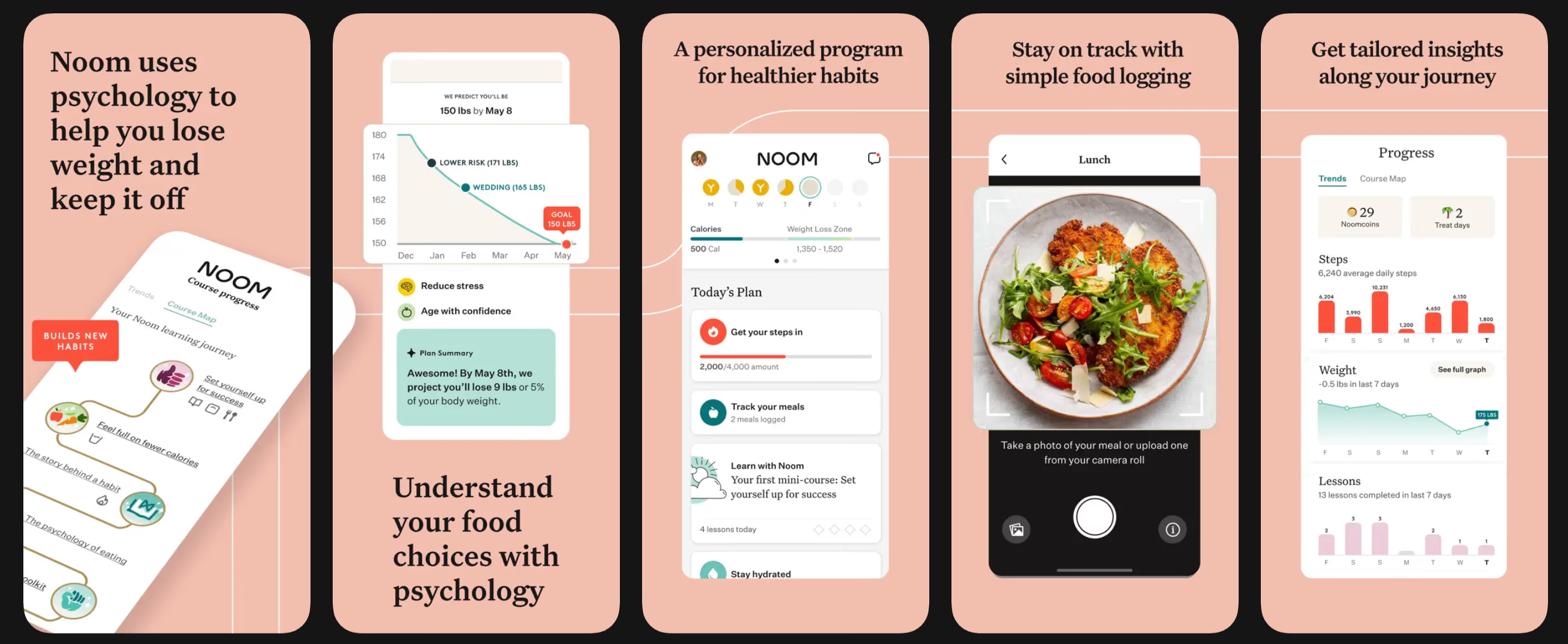
Noom is the most studied case. Its web-to-app funnel runs up to 113 screens and lasts 10 to 15 minutes. Each step serves a precise goal in building commitment: set the context, teach a behavioral framework, project results, deliver concrete advice, and finally present the paywall as the logical next step of what has just been built.
What sets the Noom approach apart from generic quizzes: the questions introduce a frame of reference that the user absorbs gradually. The paywall does not arrive as an interruption. It arrives as a delivery. To go further on the sequence aha moment before the paywall, Noom is the best-documented example of this logic applied at scale.
Flo: commitment through depth
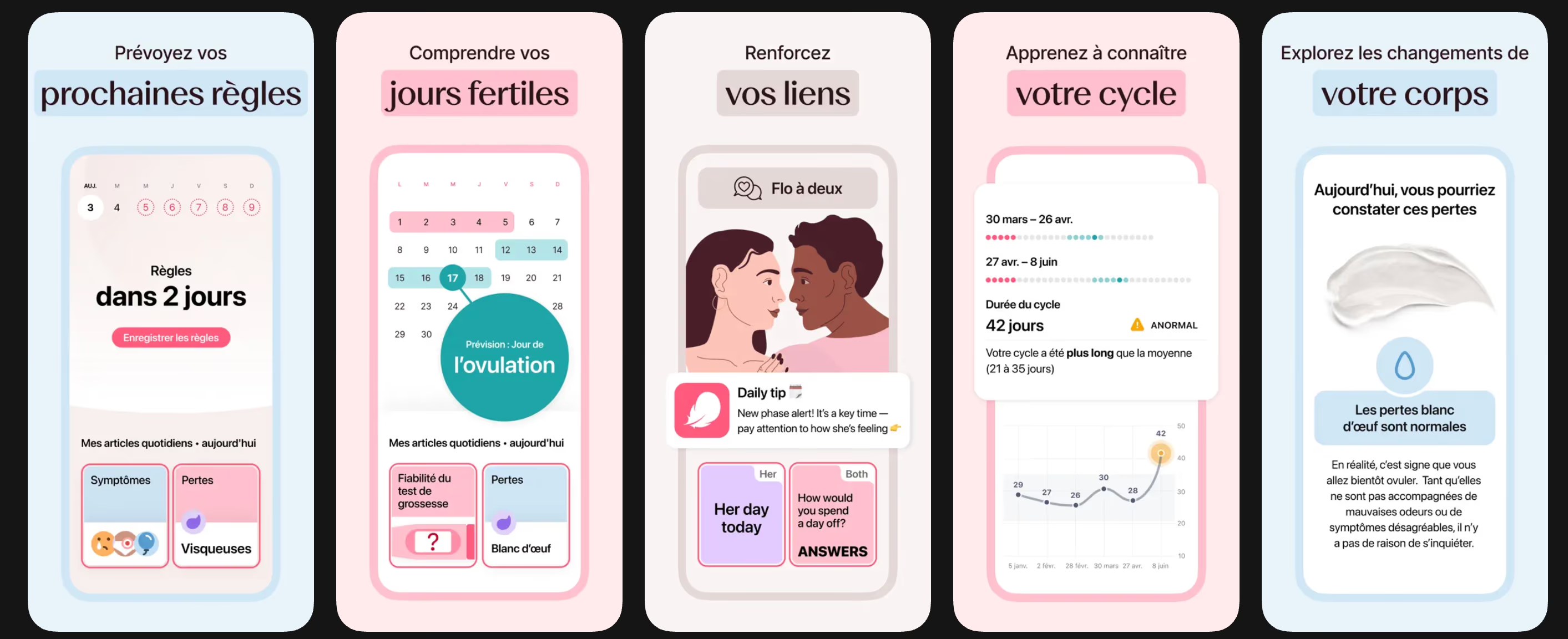
Flo takes a different approach with the same principle. Its 70-screen questionnaire, about 7 minutes, covers dense and personal health data. The length that "should" create friction becomes a signal of seriousness. Each question deepens the perception that the app understands the user's specific situation.
According to the FunnelFox 2026 analysis, Flo inserts a moment of interaction just before the paywall: the user has to tap a gift box to see what is inside. The reveal is a free 14-day trial, immediately extended to 30. The paywall then arrives as a choice between two options, not as a barrier.
These two examples share one logic: the paywall does not sell access, it delivers something the user has already started building in the quiz. This is what we call optimizing your paywall from upstream.
When to avoid quiz onboarding
The quiz is not universal. There are contexts in which it creates friction with no conversion in return.
Gaming apps
This is the best-documented contraindication. In gaming, the install experience is the product. The user wants to play, not answer questions. A 20-screen quiz before the first play session creates immediate drop-off.
According to RevenueCat SOSA 2026, gaming sells 82% of weekly plans and generates volume through repetition and speed of progression, not through initial personalization. The quiz is structurally unsuited to this model.
Apps with immediate, occasional value
If your aha moment can be delivered in under 2 minutes without personalization, the quiz delays that moment for no reason.
A productivity tool whose value is visible from the first action, a document-scanning app, a financial calculator: in these cases, the friction of the quiz is not offset by emotional investment. The user wants to see the result, not build a profile.
For warm channels such as branded search, Airbridge explicitly says a short landing page with a direct paywall can outperform a long quiz, because the intent is already there on arrival. The quiz is for building intent when it is missing, not for validating intent that is already present.
When the answers are not used
This is the most common and the most expensive mistake. A quiz whose answers change neither the content, nor the paywall, nor the plan offered is fake personalization.
Users quickly detect when their answers had no impact on what they see. Trust drops, and conversion with it. The rule is simple: each question must change something in what follows. If you cannot explain how the answer to each question influences the downstream experience, delete the question.
Apps with a retention problem, not a conversion problem
Quiz onboarding is a conversion architecture. It brings more users through the paywall. It does not solve a post-paywall retention problem.
If your app loses the majority of its subscribers in the first 30 days, a longer quiz is not what you need. You need an improvement in the value delivered after payment. Investing in a sophisticated quiz to convert users who will leave in the following 2 weeks is optimizing the wrong problem.
The mistakes that sink a quiz
Asking questions without using the answers. This is the first contraindication listed by the PaywallPro 2025 data. If the answers change nothing in the content, the personalization is perceived as fake.
A quiz that is too long for a low-intent app. The optimal length depends on how much intent your audience has on arrival. On a cold audience (paid social), a long quiz builds intent. On a warm audience (search), it kills it.
No progress bar. A progress bar is documented as raising the completion rate by 10 to 20%. Not including one is a missed opportunity on every quiz session.
A generic paywall after a personalized quiz. All the personalization work done in the quiz has to show up in the paywall. If the user has answered 30 questions and lands on a standard paywall that uses none of that information, the effect is the opposite of the one you wanted. To go further on the structural decisions of the paywall, personalizing the headline is the most direct lever.
Asking for sensitive information too early. Flo collects intimate health data, but the sensitive questions arrive after several introductory screens. The user has to have invested enough in the quiz to agree to share personal information without it creating distrust.
FAQ
What is a quiz onboarding in a mobile app?
A quiz onboarding is a sequence of questions asked of the new user before they reach the product or the paywall. Its main role is to build progressive commitment, collect data to personalize the experience, and filter high-intent users. The best implementations use the answers to personalize the paywall directly, which turns the payment screen into a personalized delivery rather than a generic sales screen.
Does quiz onboarding really improve conversions?
Yes, in the right contexts. Apps like Noom and Flo have built a significant share of their conversion model on long quizzes of 70 to 113 screens. The documented mechanism: each answer increases the user's emotional investment, which reduces drop-off at the paywall. Adding progress bars alone can raise the completion rate by 10 to 20% according to Funnelfox data. The imperative condition: the answers must actually influence what the user sees next.
How many questions should you put in a quiz onboarding?
There is no universal number. Adapty recommends starting with 3 to 5 questions and iterating from completion data. Apps like Noom show that a long quiz can convert strongly if each step serves a precise goal in building commitment. Apps with more immediate value do not need more than 5 to 10 questions. The criterion is not the number, but the fact that each question changes something in the experience that follows.
What is the difference between an in-app quiz onboarding and a web-to-app quiz?
An in-app quiz happens inside the app, after install. A web-to-app quiz happens on a web page before install, with the goal of converting the user before they even arrive in the app. Noom uses both: a long web funnel to convert visitors into subscribers, and an in-app onboarding to activate users who installed without going through the web. The psychological mechanics are the same in both cases, but the technical context and the metrics are different.
For which app categories is quiz onboarding most effective?
According to Airbridge 2026 data, quiz onboarding performs best in the categories where personalization is at the heart of perceived value: Health & Fitness, Education, and Productivity. Noom and BetterMe are cited as the references in Health & Fitness, with quiz funnels that generate both high conversion and long-term retention. Conversely, gaming and apps with immediate, occasional value are the categories where the quiz creates the most friction with no measurable benefit.
Also read
Mobile app onboarding: Duolingo, Calm, and Headspace, decoded
60% of a mobile app's conversions happen in the first week, and 55% of cancellations of a 3-day trial happen on Day 0. Duolingo anchors motivation, Calm makes you feel the product, Headspace personalizes the path.

Aha moment: how to find it in your onboarding?
More than 70% of users uninstall in the first 3 days, often without having felt the app's value. The aha moment is that click, and onboarding has to place it before the paywall.